Worksheet Preview
Browse all ten printable sheets below. Every sheet is built around division facts and is ready for home or classroom printing.




Introduction
Class 3 Division Facts Practice Worksheet helps children work on division facts in short, focused tasks that are easy to use at home or in class. This page includes all 10 previews, simple teaching ideas, and practical guidance so adults can choose the right pages with confidence.
Class 3 learners usually need direction that is clear, visual, and repeatable. This worksheet set keeps the learning goal steady while changing the question style just enough to hold attention. That means the child keeps revisiting division facts without feeling as if every sheet is exactly the same.
Because the class 3 division facts practice worksheet is available as preview images and a PDF download, it fits classroom lessons, home learning, tutoring sessions, and revision folders. A teacher can print several pages for guided support in math, while a parent can use one sheet at a time across the week.
What Children Learn from This Worksheet
This worksheet is built around division facts, but the learning is broader than the title alone. As children move through the pack, they also practise division facts, grouping, and reasoning, follow written directions, and build the confidence needed to complete independent work more carefully.
- Children build confidence with division facts.
- Children strengthen division facts, grouping, and reasoning.
- Children move from concrete support to written recording.
- Children check answers with reasoning instead of guessing.
Those supporting gains matter in real classrooms and homes. When a child reads the direction more carefully, checks an answer, or completes a line of work neatly during the class 3 division facts practice worksheet, the worksheet is helping with routine and self-management as well as math.
Worksheet Objective
The goal of this resource is to help children practise division facts in a way that feels organised and achievable. Every preview sheet is designed to keep the child focused on one clear outcome rather than on crowded page decoration or filler content.
A strong math worksheet should help adults teach, not simply keep children busy. That is why the class 3 division facts practice worksheet page includes worked guidance, clear preview images, printable downloads, and enough written explanation for parents and teachers to decide how and when to use the pack.
How to Use This Worksheet
A short routine usually leads to the best results with division facts. Start by naming the worksheet skill, look at one model question together, and then let the child work through a small set of questions independently before checking answers.
- review the instruction and solved example.
- model one question slowly.
- let the child try a short set alone.
- check mistakes immediately.
- finish with an oral explanation of one answer.
This routine keeps the class 3 division facts practice worksheet calm and purposeful. It also allows adults to see whether the child truly understands the idea or is simply copying a pattern without understanding.
Benefits of Printable Worksheets
Printable worksheets remain useful for class 3 division facts practice worksheet because they remove a lot of friction. The whole task is visible, the child can point to the line being used, and the adult can annotate the page immediately. That makes guided support easier and turns the finished sheet into a simple progress record.
For class 3 learners, paper practice often works especially well because it supports concentration, page tracking, and steady response habits. Children learn how to begin, continue, review, and finish a math task with less distraction than they often experience on screens.
A printable worksheet focused on division facts also respects different teaching situations. It can be used as morning work, homework, table practice, intervention support, or a quiet after-school activity. That flexibility is one reason parents and teachers keep relying on worksheets for daily reinforcement.
Worksheet Instructions
Before the child starts the class 3 division facts practice worksheet, read the instruction aloud and point to the example if one appears. A quick adult model at the beginning often prevents a whole page of avoidable mistakes later.
- Read the worksheet title and direction together.
- Solve one short division example together before the child starts the page alone.
- Complete one guided question if extra support is needed.
- Let the child answer a short set independently.
- Check the work together and correct one idea at a time.
It is better to stop after accurate work on division facts than to push through a tired page. Short sessions with good attention usually create stronger learning than long sessions filled with guesswork.
Worksheet Preview Explanation
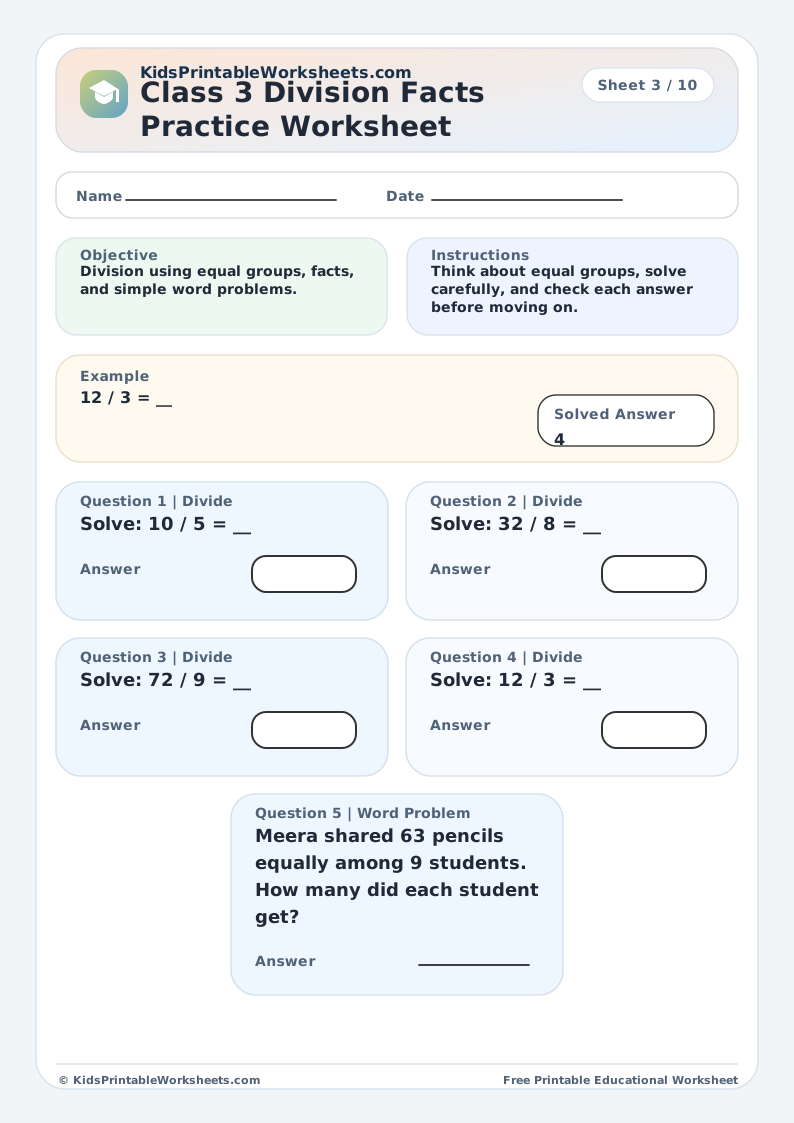
The preview gallery above shows the exact style of the worksheet pack. Across the sheets, children may work through number facts, use pictures or objects as support, choose the correct answer from options, and check whether the number sentence makes sense. This variation matters because it checks whether division facts is secure across more than one question style.
Adults can look through the class 3 division facts practice worksheet gallery before printing and choose whether to begin with the most guided sheet or jump into a fuller page. That makes the preview section useful for lesson planning, homework selection, and home practice pacing.
Teaching Tips for Parents and Teachers
The worksheet works best when adults treat division facts as a teaching opportunity rather than as a silent test. Observe how the child begins, what happens after the first mistake, and whether the learner can explain at least one answer.
- keep counters, number lines, or dice nearby.
- watch whether mistakes come from reading or calculation.
- treat the page as guided practice, not speed work.
- save finished sheets to compare progress over time.
At home, the same advice still applies for class 3 learners using the class 3 division facts practice worksheet. A quiet table, a pencil, and ten focused minutes are usually enough. Parents do not need to recreate a classroom; they only need a steady routine and a willingness to talk through the first few items.
Printable Worksheet Advantages
One practical advantage of printable worksheets like the class 3 division facts practice worksheet is that they stay easy to use. The file can be opened quickly, printed on demand, added to a homework folder, or revisited later in the week. This matters for families and teachers who want reliable resources without account barriers or extra setup.
- paper keeps numbers visible for discussion.
- adults can annotate methods directly on the page.
- short printed tasks fit homework and revision folders.
- the same sheet works well with concrete materials beside it.
That combination of convenience and real educational value is what makes a printable math resource for division facts worth keeping on the site. The worksheet should save adults time while still supporting meaningful learning.
Additional Learning Activities
The best worksheet routines for division facts do not end when the page is finished. A short follow-up activity can help the child transfer the same skill into speech, play, or notebook work so the learning becomes more durable.
- use counters or bottle caps to model the numbers.
- make small oral story problems.
- play a quick number card game.
- ask the child to explain one answer aloud.
These follow-up ideas are intentionally simple for the class 3 division facts practice worksheet audience. Most use everyday materials or quick oral discussion, which means adults can extend the learning without preparing a separate lesson.
Conclusion
Class 3 Division Facts Practice Worksheet gives children a clear way to work on division facts in printable, well-paced practice that fits both classroom and home routines. The page also helps adults choose the right sheets by showing full previews, FAQs, and related practice links in one place.
Download the PDF, print the pages that suit your child or class, and use the related links above when you are ready for the next step in the same skill area.
Frequently Asked Questions
This 10-page printable pack focuses on division facts. The activity style changes from sheet to sheet, which keeps practice fresh while still giving children enough repetition to build confidence.
It is best for Class 3 learners, usually around 8 to 9 years. Teachers often use it for small-group work or homework, and parents can use one page at a time for short revision at home.
In the class 3 division facts practice worksheet, children can expect tasks such as work through number facts, use pictures or objects as support, and choose the correct answer from options. The early sheets work well for teacher-led modelling, while later sheets help children apply division facts with less prompting.
Yes. Many families print one or two pages at a time and save the rest for later in the week. Short sessions usually work best, especially when a child needs calm, repeated practice without screen distractions.
Solve one short division example together before the child starts the page alone. For the class 3 division facts practice worksheet, that quick model question helps children understand the task before they complete the rest of the worksheet independently.
Two or three short sessions each week are usually enough. For most children, 10 to 15 focused minutes at a time builds better accuracy and confidence than one long sitting.
Assessment Notes for Adults
Finished pages from the class 3 division facts practice worksheet can double as simple assessment evidence. Compare early sheets with later sheets to see whether the child is becoming more accurate, quicker to start, or more willing to self-correct when working with division facts.
When reviewing class 3 division facts practice worksheet, it helps to notice more than correct answers. Pay attention to whether the child follows the instruction independently, records math work more neatly, or shows stronger stamina across the pack. Those changes often show real learning progress.
Differentiation Ideas
This worksheet set is flexible enough for mixed readiness levels within class 3, especially when teaching division facts. Children who need more support can complete one section at a time, use objects, or stay on the most guided sheets first. Children who are ready for more independence can explain their answers, complete a full page, or move on to a related worksheet.
Because the worksheet keeps division facts as one clear learning goal, adults can adjust the pace without changing the core concept. That makes it easier to support several learners with different confidence levels.
Building Independent Habits
A good printable worksheet helps children become more independent over time, especially when working on division facts. When adults repeat the same pattern of read, model, answer, and check, children start to internalise that routine and rely less on prompts.
That independence shows up in small but important ways during the class 3 division facts practice worksheet: a child notices a skipped line, rereads a sentence without being told, or pauses to check whether an answer fits the question. Those habits support school learning well beyond this one resource.
Common Mistakes to Watch
Children working through class 3 division facts practice worksheet often make a small set of predictable mistakes. Some rush the instruction, some skip part of the page routine, and some understand the idea but record the answer inaccurately. Spotting that pattern early helps adults intervene more effectively.
If the same mistake appears more than once, pause the worksheet and model one more example linked to division facts. A quick correction at the right moment is usually more useful than finishing the whole page with the same misunderstanding still in place.
Small Group Teaching Use
The class 3 division facts practice worksheet also works well in small groups. Adults can let one child explain the instruction, ask another child to model the first step, and then set a short independent task while they listen for errors in vocabulary, method, or confidence.
This kind of group use is especially helpful when several learners in class 3 need reinforcement with division facts. The worksheet gives everyone a shared structure while still making it easy to offer individual prompts.